
5th GREAT APE BORN AT L.A. ZOO
THE L.A. ZOO WELCOMES WESTERN LOWLAND GORILLA BABY
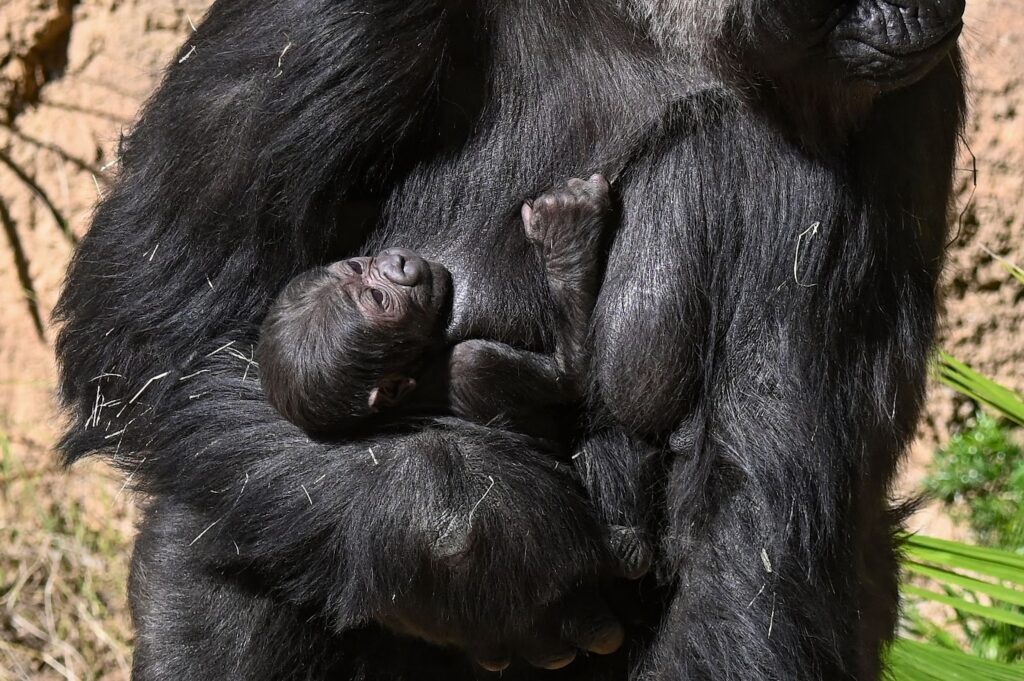
Gorillas N’djia & Kelly’s Second Offspring in Five Years!
Gorilla Photos & Video: CLICK HERE
Baby Boom Photos & Video: CLICK HERE
Credit: © Los Angeles Zoo
LOS ANGELES, CA – Dec. 2, 2025 – The Los Angeles Zoo is announcing yet another great ape born at the Zoo in just the last few months as the family troop of western lowland gorillas (Gorilla gorilla) has gotten a little bit bigger with the arrival of an infant on Saturday, Nov. 22.The new gorilla makes the fifth great ape birth at the Zoo with three chimpanzees and one orangutan also born this year.
The latest gorilla baby has yet to be named and the gender has not yet been identified. He or she was born to mother, N’djia (31), and silverback, Kelly (38). This is the pair’s second offspring as youngster Angela was born at the L.A. Zoo in 2020. N’djia and her infant have been safely bonding behind the scenes and are now on exhibit at Campo Gorilla Reserve, joining the rest of their family troop.
“This is an exciting year for the L.A. Zoo with all of the new great ape infants,” said Misha Body, Deputy Zoo Director of Animals & Experiences, L.A. Zoo. “Our guests already love Angela and have such a bond with her. Seeing the new offspring around the Zoo will hopefully deepen these connections and foster a conservation mindset for our guests to care more about these critically endangered species.”
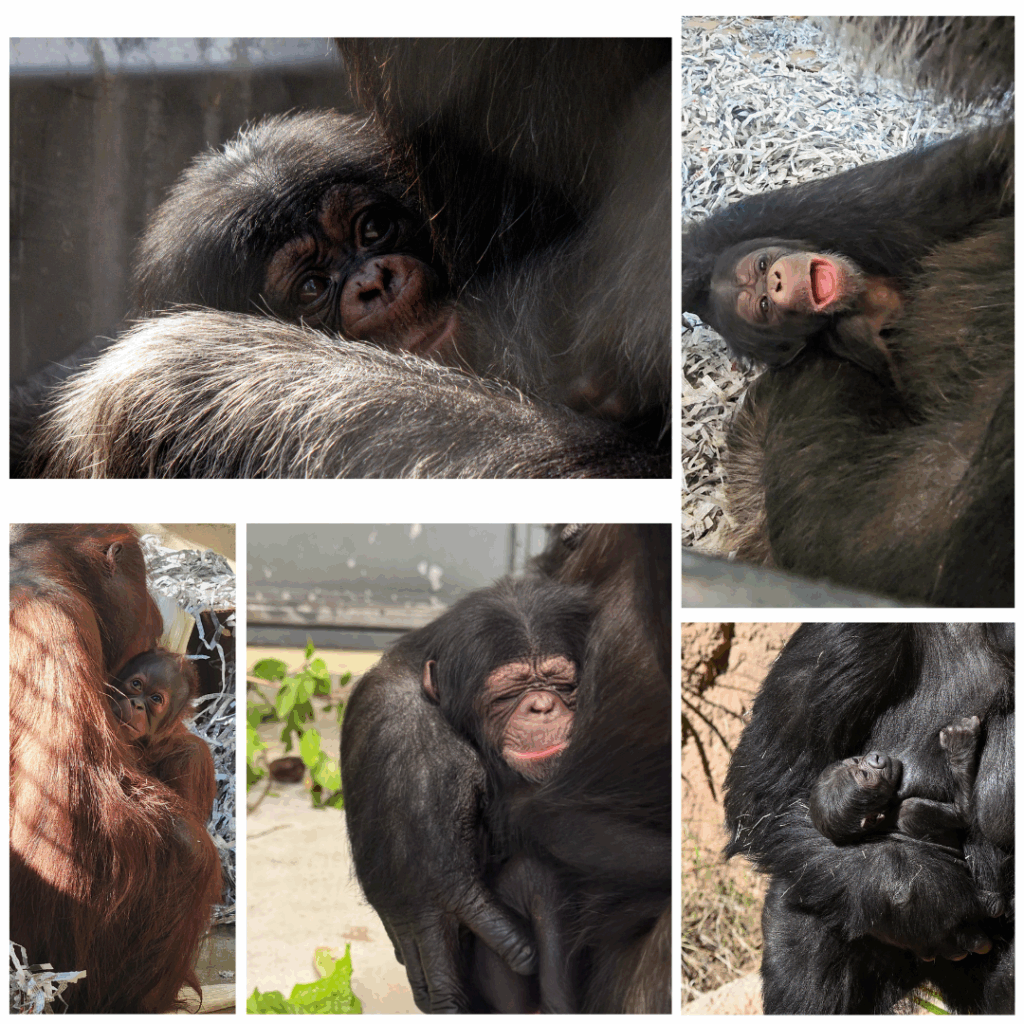
The gorilla birth marks the final addition to a baby boom of great apes at the Los Angeles Zoo. In a roughly four-month period, the Zoo saw the birth of five great apes.
Chimpanzees
In August, 35-year-old chimpanzee (Pan troglodytes) Yoshi gave birth to her third offspring, the first chimpanzee born at the Los Angeles Zoo in more than a decade. Two weeks later, Vindi, an 18-year-old first-time mom, also delivered a healthy infant. Not only did it give Vindi a chance to observe Yoshi’s maternal behavior before giving birth herself, it also gave the two young female chimpanzees the opportunity to be raised together by their mothers, as they would be in the wild.
Then, in November, the Zoo welcomed a third chimpanzee offspring. Zoe, another experienced chimpanzee mother, gave birth to a male infant. The three infants have become popular with Zoo visitors who’ve had a chance to observe the youngsters clinging to their mothers as they traverse their multi-level habitat. Most importantly, their presence is beneficial to the well-being and dynamics of the entire chimpanzee troop.
Bornean Orangutan
In October, the L.A. Zoo welcomed a new Bornean orangutan (Pongo pygmaeus) for the first time in nearly 15 years. The male infant was the result of a pairing between 43-year-old female Kalim and 31-year-old male Isim. The infant can be observed bonding with his mother, Kalim, at Red Ape Rain Forest.
“Each of these successful great ape births at the Zoo this year are a testament to the high level of care and wellbeing our team provides,” said Dominick Dorsa II, Director of Animal Care, L.A. Zoo. “I am so excited for the staff and for our guests to have the opportunity to see all of these new infants as they mature and the troops exhibit new behaviors.”
The bounty of great ape births in 2025 is the result of breeding recommendations made by the Species Survival Plans (SSP) for each species. The L.A. Zoo participates in SSPs and other cooperatively managed breeding programs that are administered by the Association of Zoos and Aquariums (AZA). The SSPs determine which animals to prioritize for breeding, and which individuals to pair together based on their genetics and other factors to ensure genetic diversity and sustainability of the population.
Western lowland gorillas are classified as Critically Endangered by the International Union for Conservation of Nature (IUCN). Populations continue to decline in the wild due to illegal hunting, susceptibility to diseases such as the Ebola virus, and habitat degradation and destruction. Despite the fact that all killing, capture, and consumption of great apes is illegal, hunting for bushmeat is the primary reason for the western lowland gorilla’s decline. This species of gorilla is native to the lowlands and swamp forests of Cameroon, Central African Republic, Equatorial Guinea, the Democratic Republic of the Congo, Gabon, and Angola. These peaceful animals are social and live in stable, cohesive groups composed of one silverback adult male, several adult females, and their offspring.
Guests can see the new western lowland gorilla infant and her family troop at Campo Gorilla Reserve, weather permitting. Guests can also see the three new chimpanzee infants at the Chimpanzees of Mahale Mountains habitat and the new Bornean orangutan infant at the Zoo’s Red Ape Rain Forest.
MEDIA CONTACT:
Carl Myers | 323-644-4273
lazoo.press@lacity.org
About the Los Angeles Zoo
The Los Angeles Zoo is accredited by the Association of Zoos and Aquariums (AZA) and is dedicated to providing exemplary animal care and wellbeing. As a trusted leader in local and global conservation efforts, the Los Angeles Zoo is saving wildlife and connecting Angelenos to the natural world by delivering diverse learning opportunities and creating unforgettable experiences. The lush 133-acre campus and its passionate and dedicated team welcomes all to be inspired by the Zoo’s vision to create a just and sustainable world where people and wildlife thrive, together. The Zoo is located on Zoo Drive in Griffith Park at the junction of the Ventura (134) and Golden State (5) freeways. Admission is $27 for adults and $22 for children ages 2 to 12. For more information, visit the L.A. Zoo website at www.lazoo.org.
###