
MORE THAN 650 ENDANGERED L.A. ZOO-BRED FROGS
RELEASED INTO SAN GABRIEL MOUNTAINS
Frogs Were Reared at L.A. Zoo’s New Headstarting Facility
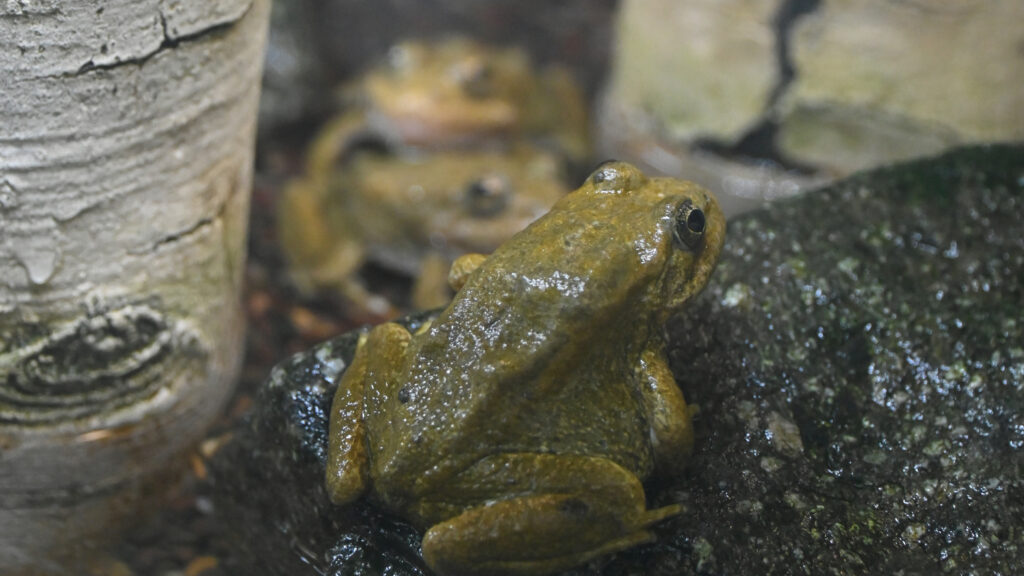
PHOTO & VIDEO GALLERY: CLICK HERE
CREDIT: © Los Angeles Zoo
LOS ANGELES, CA – Sept. 10, 2026 – In a major milestone for local wildlife conservation, staff from the Los Angeles Zoo, the Aquarium of the Pacific, and the U.S. Geological Survey (USGS) successfully released 653 endangered southern mountain yellow-legged frogs (Rana muscosa) into the San Gabriel Mountains. All the frogs released were bred at the L.A. Zoo, with 227 of those frogs raised inside the L.A. Zoo’s brand-new bio-secure amphibian headstarting facility. On Aug. 19, 338 frogs were released to streams in their native habitat, and an additional 315 frogs were released on Aug. 27. The successful release adds to the nearly 7,000 L.A. Zoo-bred frogs released to the wild since the inception of the Southern Mountain Yellow-legged Frog Recovery Program.
“Seeing our new headstarting facility transition from a concept to a fully operational reality is a monumental milestone for the recovery of the southern mountain yellow-legged frog,” said Byron Wusstig, Curator of Ectotherms, Los Angeles Zoo. “By raising these sensitive amphibians in a specialized, temperature-controlled environment, we are significantly increasing their chances of survival. Returning 227 robust frogs to the San Gabriel Mountains is a direct result of this expanded capacity and the tireless dedication of our collaborative team.”
Built into a renovated space at the Zoo’s Children’s Discovery Center, the new facility is outfitted with specialized tanks and life support systems that provide optimal water quality. This dedicated environment empowers the Zoo’s animal care team to oversee the species from the exact moment they are bred and hatch, giving the tadpoles a crucial “headstart” to morph and reach a robust size before they enter the wild. By allowing the tadpoles to mature on-site, the frogs can be released at a larger and more developed life stage to ensure they are less susceptible to predation and other natural challenges of survival in the wild.
The conservation momentum continues this fall. Later in September, approximately 112 tadpoles bred at the L.A. Zoo will transfer to the Santa Ana Zoo for ongoing care. The Southern Mountain Yellow-Legged Frog Recovery Program is a collaborative endeavor, formed under the leadership of USGS between the Los Angeles Zoo, the San Diego Zoo Wildlife Alliance, Omaha’s Henry Doorly Zoo and Aquarium, U.S. Forest Service, U.S. Fish and Wildlife Service, and the California Department of Fish and Wildlife. The partnership has since grown to include the Aquarium of the Pacific, Santa Ana Zoo, Big Bear Alpine Zoo, and the Birch Aquarium, with more partners joining in the near future.
The International Union for Conservation of Nature (IUCN) classifies the southern mountain yellow-legged frog as Endangered. This species lives in perennial streams in select areas of the San Gabriel, San Bernardino, and San Jacinto Mountains. They are a medium-sized amphibian, measuring about 1.5 to 3.25 inches on average. Adult frogs have a mix of brown and yellow coloring but can also be grey, red, or greenish-brown, usually with dark spots or splotches, a form of cryptic coloration. These spots can look like lichen or moss and make the frog appear camouflaged. The belly and underside of the back legs, and sometimes the front legs, are yellow or light-orange. This gives the frog part of its common name, “yellow-legged.”
The public can view the uniquely camouflaged southern mountain yellow-legged frog at the L.A. Zoo’s Living Amphibian, Invertebrate, and Reptile exhibit (LAIR) during normal operating hours.
About the Los Angeles Zoo
The Los Angeles Zoo is accredited by the Association of Zoos and Aquariums (AZA) and is dedicated to providing exemplary animal care and wellbeing. As a trusted leader in local and global conservation efforts, the Los Angeles Zoo is saving wildlife and connecting Angelenos to the natural world by delivering diverse learning opportunities and creating unforgettable experiences. The lush 133-acre campus and its passionate and dedicated team welcomes all to be inspired by the Zoo’s vision to create a just and sustainable world where people and wildlife thrive, together. The Zoo is located on Zoo Drive in Griffith Park at the junction of the Ventura (134) and Golden State (5) freeways. Admission is $22 for adults and $17 for children ages 2 to 12. For information, call (323) 644-4200 or visit the L.A. Zoo website at www.lazoo.org.
CONTACT:
Carl Myers
(323) 644-4273 / lazoo.press@lacity.org
###